Song-Kul is the high lake in the middle of Kyrgyzstan where the yurt-camp picture everyone has in their head actually exists. It sits at 3,016 metres in the north of the Naryn Region, about 29 km long and 18 km wide, the country’s second-largest lake after Issyk-Kul. The ice only goes in late May and forms again in the second half of October, so the whole season is a summer one: herders bring their flocks up in June, the camps fill in July and August, and by the middle of September most are packing up.
There is no village, no shop and, in most places, no phone signal. What there is: a ring of yurt camps on the north-east, north and south shores, horses to hire at every camp, kok-boru matches in July, and a sky at night that is the main reason many people come. The eastern end of the lake is part of the Karatal-Japyryk nature reserve and a Ramsar wetland, with about 190 bird species recorded.
Below are our 10 picks: the lake and its camps, the three ways in (two road passes and a horse trek), and the base towns of Kochkor and Naryn with a side trip to Kol-Ukok. For the lake’s place in a longer route, see our 25 best places to visit in Kyrgyzstan.
In this guide
Map of Song-Kul and the roads in
On the lake
The lake, the two camp clusters most people stay at, and what to do once you are there. Nothing here needs booking beyond the yurt itself, but July and August fill up.
1Song-Kul lake
The lake at 3,016 metres
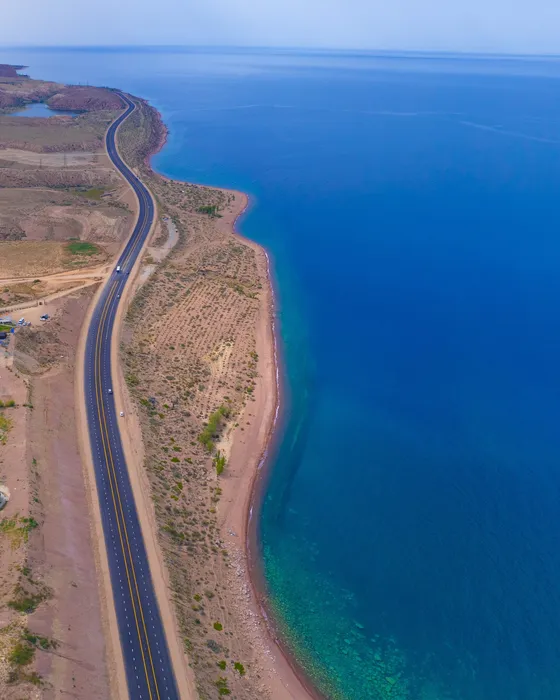
Song-Kul is a shallow lake in a wide grassy bowl: about 29 km long, up to 18 km wide, 270 square kilometres of water and no deeper than 13.2 metres. The pastures around it have been summer grazing for as long as anyone knows, which is why the camps are yurts and not hotels. The yurts come up with the herders in June and go down again in September.
The climate is the point to understand before you book. The January average is minus 20 °C, the July average is 11 °C, and snow lies for 180 to 200 days a year. The ice starts to thaw in the second half of April and is gone by late May, and the lake freezes again from the second half of October. In July and August the surface water can reach 20 to 23 °C in the shallows, which is enough for a short swim on a hot afternoon.
The eastern part of the lake, 3,400 hectares of shore and 5,200 hectares of water, has been part of the Karatal-Japyryk state nature reserve since 1998, and the whole lake has been a Ramsar wetland since 23 January 2011. In September 2026 the Ministry of Natural Resources put up a 1 km fence at Batai-Aral to keep vehicles out of the bird-nesting zone next to the camps, so stay on the tracks there. We found no entry or eco-fee for the lake as of November 2026, but carry small som notes in case a checkpoint appears.
- Altitude
- 3,016 m
- Size
- About 29 km by 18 km, 13.2 m deep
- Season
- Camps open mid-June to mid-September; July and August are reliable
- Where
- Centre of the lakeOpen in Maps
Details checked November 2026
View this post on Instagram
2Yurt camps at Batai-Aral
The north-east shore, where the Kochkor road arrives
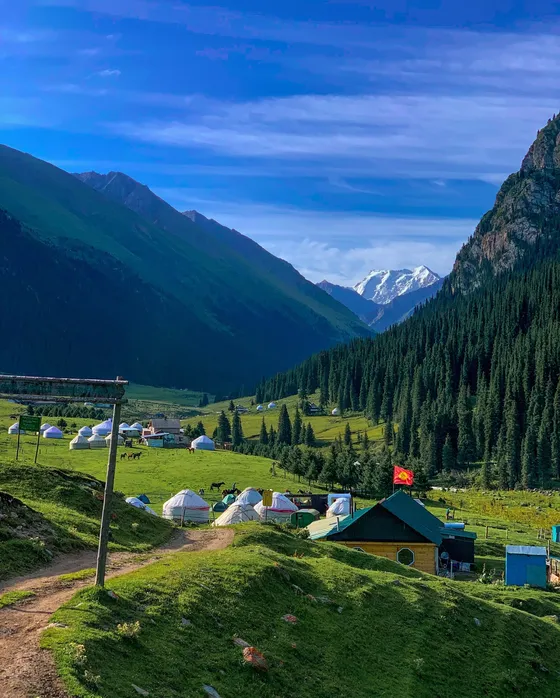
Batai-Aral is the stretch of the north-east shore where the road from Kochkor over Kalmak-Ashuu comes down to the water, and it has the biggest cluster of camps: the CBT Kochkor yurt camp, Shepherd’s Life and a row of family camps. It is our pick for a first night at the lake, because it is the easiest to reach and the easiest to leave, and the Kochkor Fest horse games are held here. There is a second group of camps on the north shore, about 10 km west, where the Kyzart horse trek comes down.
Expect a family camp, not a resort. The two CBT camps listed for Batai-Aral have five yurts each for up to 30 guests, mattresses on the floor, a stove in each yurt, an outside toilet and, at one of them, an outside shower. Meals are in a separate dining yurt or tent. Guides we trust put a night with dinner and breakfast at USD 15–25 per person in a family or CBT camp, and USD 25–45 full board at the more organised camps, as of 2026. CBT Kochkor and CBT Kyrgyzstan publish no tariff online, so ask when you book.
Book two to three weeks ahead for July and August, by email or WhatsApp through the CBT Kochkor office at Pionerskaya 22A in Kochkor, or through CBT Kyrgyzstan. A 4x4 from Kochkor costs about 5,200 som per vehicle for four to six people through CBT, or USD 60–90 one way with other drivers, and takes 2.5 to 3.5 hours (2026). The camps are 93.8 km from Kochkor by road.
- Yurt night
- USD 15–25 per person with dinner and breakfast (2026)
- Getting there
- 4x4 from Kochkor, about 5,200 som per vehicle (2026)
- Distance
- 93.8 km from Kochkor by road
- Where
- The CBT Kochkor yurt campOpen in Maps
Details checked November 2026
View this post on Instagram
3The south-shore camps
Showers, sockets and Starlink on the Naryn side
The south shore is reached from Naryn over the Moldo-Ashuu pass, and it has the lake’s more comfortable camps. The biggest is run by the Bishkek agency Ak-Sai: 44 guest yurts for up to 90 people, electricity and sockets in every yurt, shared showers and toilets, a dining hall, a bar, a fire pit and Starlink Wi-Fi. It is open June to September. Its price list for 2026 shows USD 65–85 for a place in a double yurt, from breakfast only to full board, and USD 100–115 for a single. Lunch or dinner without a stay is USD 25.
Within a couple of kilometres are smaller camps: Nomad’s Dream next door, Sary-Bulun and Baiysh (which advertise a shower and better toilets), Silk Road, Kambar-Ata and others. None of them publishes a price, so write or call ahead. The south shore is also where three petroglyph sites are mapped on the slopes just behind the camps, an hour’s walk or a short horse ride away.
From Naryn it is 112.4 km and about 2.5 hours by road to the Ak-Sai camp, and the CBT Naryn office at Lenina 8 arranges drivers. We found no published 2025 or 2026 taxi price from Naryn, so agree one in som before you set off. Tours from Bishkek also use the south shore, driving in over Kalmak-Ashuu and across the lake’s east end.
- Best for
- A yurt with a socket and a shower
- Yurt night
- Ak-Sai: USD 65–85 per double place, USD 100–115 single (2026)
- Distance
- 112.4 km from Naryn by road
- Where
- The Ak-Sai yurt campOpen in Maps
Details checked November 2026
View this post on Instagram
4Horse riding from the camps
An hour on the shore or a full day to the passes
Every camp has horses, and an hour or two along the shore is the thing to do on your first afternoon. At the Ak-Sai camp a horse is USD 15 an hour (2026). A Bishkek operator that sells two-day trips lists riding at the lake at about 1,000 som an hour, and travellers in 2026 report USD 10–20 for a few hours depending on whether a guide rides with you. Family camps are cheaper, but we found no published som rate for 2025 or 2026, so agree the price before you mount.
For a full day, a negotiated horse from a herder runs USD 15–25 a day, and an organised day with a guide USD 40–50 (July 2026). The classic rides go up to the passes above the camps for the view back over the lake. On the north shore the Tilek camp runs rides and is on WhatsApp.
Helmets are not standard, so ask for one or bring your own; one operator rents them at 300 som a day. If you are thinking of a multi-day trek, do a few hours first. Saddle soreness from a long first day lasts for days.
- Price
- USD 15 an hour at Ak-Sai; about 1,000 som an hour via operators (2026)
- Full day
- USD 15–25 with a herder, USD 40–50 organised (2026)
- Bring
- A helmet if you have one
- Where
- The Tilek camp on the north shoreOpen in Maps
Details checked November 2026
View this post on Instagram
5Kok-boru and the Kochkor Fest
Horse games on the shore in July
The horse games are the other reason to be at the lake in July. Kok-boru, the game where two teams of riders fight over a goat carcass (ulak tartysh in Kyrgyz), and er enish, wrestling on horseback, are played on the flat shore in July, and camps stage them for groups through the summer. Ask your camp: they are priced per group, so a show works out cheaper the more of you there are.
The one fixed date is the Kochkor Fest, held at Batai-Aral on the north-east shore in late July: on 28 July 2025 it had ulak tartysh, er enish, a folklore show and Kyrgyz food. The 2026 date had not been published when we checked in November 2026, so ask CBT Kochkor. Song-Kul also hosted Gallops 2025, a 200 km, five-day expedition ride by about 100 riders from more than 15 countries around the lake on 19 to 27 July 2025.
The World Nomad Games are a different event: the sixth edition ran from 31 August to 6 September 2026 in Bishkek and on Issyk-Kul, not at Song-Kul.
- When
- July, with the Kochkor Fest in late July
- Price
- Camp shows are priced per group; ask your camp
- Kochkor Fest 2025
- 28 July at Batai-Aral
- Where
- Batai-Aral, the festival groundOpen in Maps
Details checked November 2026
View this post on Instagram
Passes and the way in
Three ways in. Two are road passes that open in late May and close with the first snow; the third is a two- or three-day horse trek that arrives on the north shore.
6Kalmak-Ashuu pass
The main road in, 3,446 metres
Kalmak-Ashuu is the pass almost everyone crosses: 3,446 metres, on the road that leaves the Bishkek–Naryn highway at the hamlet of Sary-Bulak and climbs to the north-east shore. From Sary-Bulak it is 56.7 km to the Batai-Aral camps, and 93.8 km from Kochkor. The east side is the steeper one, a stone road up a gorge; the west side drops gently through meadows to the lake, and the first view of the water from the top is the one you came for.
The pass is cleared by a snow-blower at the end of May and closes with the first snowfall in late October, and the Ministry of Transport has shut it earlier in a bad year: on 2 November 2022 it was closed together with Moldo-Ashuu. Overlanders call it the easiest of the lake’s approaches, a well-kept gravel road, and in August 2026 the ministry laid asphalt on 5 km of the Sary-Bulak road (km 8.6 to 13.6). Whether an ordinary car makes it depends on the weather, so ask in Kochkor; a high-clearance car is the safe choice.
By mountain bike it is a known descent: about 54 km and four hours from the lake to Sary-Bulak at 2,800 metres, with 600 metres of climbing and 1,340 metres down.
- Height
- 3,446 m
- Open
- Late May to late October, weather permitting
- Distance
- 56.7 km from Sary-Bulak to the camps; 93.8 km from Kochkor
- Where
- The top of the passOpen in Maps
Details checked November 2026
View this post on Instagram
7Moldo-Ashuu pass
The serpentine road from the Naryn side
Moldo-Ashuu is the southern way in, between the Kurtka valley on the Naryn side and the south-shore camps. The pass is 3,238 metres on OpenStreetMap (sources give 3,202 to 3,243), and the south face is a stacked serpentine, described as seven levels of hairpins, that cyclists and drivers come for. There is a viewpoint at the top. Dense fog is common and the descent is steep, so drive it in daylight.
It closes with the weather like Kalmak-Ashuu: both were shut on 2 November 2022. From Naryn it is 112.4 km to the Ak-Sai camp, about 2.5 hours. We found no published figure for how a two-wheel-drive car copes, so ask your driver or CBT Naryn.
One correction to a common mix-up. The famous ‘33 parrots’ switchbacks are not Moldo-Ashuu but Teskey-Torpok, a 3,132-metre pass on the track from the south-east shore towards Naryn. It is drivable in a normal car in dry weather and much harder after rain.
- Height
- 3,238 m (OSM)
- Distance
- 112.4 km from Naryn to the south-shore camps
- Not to confuse with
- Teskey-Torpok, the ‘33 parrots’ pass, 3,132 m
- Where
- The top of the passOpen in Maps
Details checked November 2026
View this post on Instagram
8The Kyzart horse trek
Two passes and two nights, arriving on the north shore
The classic way to reach Song-Kul is the three-day ride from Kyzart, a village of about 1,500 people in the Jumgal valley, 71.2 km west of Kochkor. The standard route is day 1 up the Bazar-Turuk gorge to the Kilemche summer pastures, 19 km, sleeping in a yurt at about 2,540 to 2,690 metres; day 2 over the Jalgyz-Karagai pass at 3,326 metres and down to a camp on the north shore, 14 km; day 3 back over Tuz-Ashuu at 3,233 metres to Kyzart, 22 km. That is about 55 km in the saddle. The same route is walked in three days: 43 km and about 2,100 metres of climbing.
Arranged through a guesthouse in Kyzart, a trip in the 2025 season cost about 15,000–20,000 som per person for three days with horse, guide, helmet, two yurt nights and meals, not including transport to Kyzart. CBT Travel sold the same three days for USD 245 in 2026 including transport from Kochkor, and Bishkek operators charge USD 290–600 per person with transfers from the capital, cheaper the bigger the group. Maximum group size on the operator trips is six riders.
To reach Kyzart from Bishkek, take marshrutka 541 towards Minkush from the municipal bus station on the northern bypass road; be there before 07:00, as it leaves when full. Shared taxis also run through the day. The Kyzart pass (2,664 m) on this road is kept open all year, so the village is reachable in winter even when the lake is not.
- Days
- 3 on horseback (55 km) or on foot (43 km)
- Price
- About 15,000–20,000 som per person independent (2025); USD 245 with CBT Travel (2026)
- High point
- Jalgyz-Karagai pass, 3,326 m
- Where
- Kyzart village, where the trek startsOpen in Maps
Details checked November 2026
View this post on Instagram
Base towns and side trips
Kochkor is where most trips start, and it is in our tips below. The southern base and the best side trip near Kochkor are here.
9Naryn
The southern base at 2,044 metres
Naryn is the regional capital, a long town of about 42,000 people strung along the Naryn river at 2,044 metres, and the base for the south shore. It is 321.8 km from Bishkek and 120.6 km from Kochkor by road, and the lake’s south-shore camps are 112.4 km away over Moldo-Ashuu. A night here is also a sensible acclimatisation stop, 1,000 metres below the lake.
The CBT Naryn office at Lenina 8, near the bus station, arranges drivers and horse treks to the lake; it publishes no prices, so settle them in som before you leave. Marshrutkas and buses from Bishkek use the municipal bus station on the northern bypass road. Asman Airlines also flies Bishkek–Naryn, with a promotional one-way fare of 1,000 som instead of 2,100 som extended to 31 August 2026.
Most travellers still stage Song-Kul from Kochkor, because the northern road is the easier one. Naryn makes sense if you are continuing south to Tash Rabat and the Torugart road to China, or want to come in one side of the lake and out the other.
- Altitude
- 2,044 m
- Distance
- 321.8 km from Bishkek; 112.4 km to the south shore
- Flights
- Asman Airlines from Bishkek, 1,000 som promo fare to 31 Aug 2026
- Where
- Naryn town centreOpen in Maps
Details checked November 2026
View this post on Instagram
10Kol-Ukok lake
A glacial lake above Kochkor for a night on the way
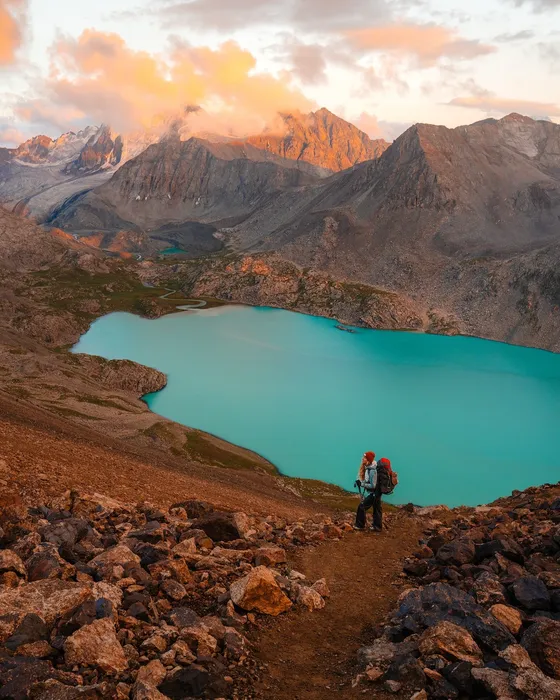
Kol-Ukok is a small blue lake at 2,970 metres in the mountains about 20 km south-east of Kochkor, 2.3 to 2.5 km long, with three small yurt camps on its shore. It is the natural warm-up for Song-Kul: a night here from Kochkor gets you used to the altitude, and it is reachable in a day on foot.
The usual plan is a taxi to the bridge on the edge of town, 600 som per car, then 14.5 km and about 4.5 hours of walking with 1,100 metres of climbing. A taxi all the way up the dirt track takes about an hour; a 4x4 is recommended, though ordinary cars also make it. Horses can be arranged through the CBT office in Kochkor or your guesthouse. In the 2025 season the Cholponai camp charged 2,100 som per person for a bed, dinner and breakfast. Book ahead in July and August, and bring warm layers.
With a spare day, walk on to Kol-Tor, a second lake about 3 km further up the Karakum gorge at around 3,480 metres, roughly 12 km and 5.5 hours there and back.
- Altitude
- 2,970 m
- Getting there
- Taxi to the trailhead 600 som, then 14.5 km on foot; or a 4x4 all the way (2025)
- Yurt night
- 2,100 som with dinner and breakfast at Cholponai (2025)
- Where
- Kol-Ukok lakeOpen in Maps
Details checked November 2026
View this post on Instagram
More around Song-Kul
A few more places and options around the lake, and the things that changed in 2026.
- Petroglyphs and the Andash kumbez: three petroglyph sites are mapped on the slopes behind the south-shore camps, and tours walk or ride to them. On the north shore, about 2 km from the Tilek and Muras camps, a stone mausoleum commemorates Andash, a local hero of the 1847 battle against the Kazakh khan Kenesary; it may be the only stone building near the lake.
- Beaches: the north shore has the best stretches of sand, with mapped beaches east of the north-shore camps and on the north-west shore. The water reaches 20 to 23 °C in July and August, but only in the shallows.
- The western road via Kyzyl-Oi: for a loop, come in from the Suusamyr valley through Kyzyl-Oi, a village at about 1,800 metres on the Kokomeren river with CBT guesthouses at USD 18–40 a night with meals (July 2026). From there the Kara-Keche pass at 3,384 metres leads to the west shore, about 150 km if the weather allows; after rain drivers detour through Chaek and Kochkor over Kalmak-Ashuu, about 290 km. The Kara-Keche track is stony but kept open for the coal mine, and there is nothing to buy between Chaek and the lake. A private car from Bishkek costs USD 80–140 a day (July 2026).
- Teskey-Torpok, the ‘33 parrots’: the switchback track from the south-east shore towards Naryn, 3,132 metres, is the one locals call 33 parrots. Normal cars manage it in dry weather; after rain it is a different road.
- Tours from Bishkek: if you do not want to arrange drivers yourself, two-day Song-Kul trips from Bishkek with a guide, a shared yurt and four meals run from about USD 180 per person in a group of 12 to USD 600 for two people (2026), driving 314 km out via Kochkor and Kalmak-Ashuu. One operator runs a shared group trip every Sunday from June to September.
- Winter: the roads close with the first snow, but one operator keeps a two-yurt winter camp near the frozen lake from December to April, with heated beds and solar power, at USD 43 for a double and 65 for a triple; it is reached in about 6 hours on horseback or snowshoes over a 3,200-metre pass.
- Fish: the whitefish you may be offered are introduced: peled was stocked in 1968, and in April 2026 the state fish farm released 800,000 whitefish fry into the lake. Rangers still pull illegal nets out every summer, 1,200 metres of them in June 2026.
- Phone and power: most of the lake has no reception. The Ak-Sai camp has Starlink and Megacom coverage, and some family camps now sell Starlink Wi-Fi by the hour. Bring a power bank; family camps have little or no electricity.
Tips for visiting Song-Kul
- Base yourself in Kochkor. Kochkor, at about 1,770 metres, 199.8 km and about 3 hours from Bishkek, is where the drivers, the CBT office (Pionerskaya 22A, next to the bus station) and the Altyn-Kol felt cooperative are. Bus 513 leaves Bishkek’s municipal bus station on the northern bypass road when full, so go in the morning; travellers paid about 300 som in 2025. Kochkor has few ATMs, and drivers and homestays want cash, so bring som from Bishkek. Our day trips from Bishkek guide covers the road as far as Issyk-Kul.
- Take the altitude seriously. Bishkek is at about 800 metres and the lake at 3,016, and most people do the climb in a day. Altitude sickness can start above 2,500 metres, usually 6 to 10 hours after arrival. Sleep a night in Kochkor (1,770 m), Naryn (2,044 m) or at Kol-Ukok first if you can, drink water, skip the alcohol on night one, and go down if a headache gets worse.
- Pack for a cold night in July. Nights drop close to freezing even in July and August, and the weather turns in an hour. Bring warm layers, a hat, a sleeping bag rated to 0 °C or ask for extra blankets, a head torch, snacks (camp meals can be small) and sun cream. Camps sell water, beer and petrol, but there are no shops at the lake.
- Book the yurt, not just the car. July and August camps fill with groups. Book two to three weeks ahead by email or WhatsApp through CBT Kochkor, CBT Naryn or the camp itself, and confirm whether the price includes dinner and breakfast. In June and September call first: the camps open and close with the weather, and the passes can be shut by snow at either end.
- Respect the reserve. The eastern end of the lake is a strict nature reserve, and the new fence at Batai-Aral marks the bird-nesting zone. Keep vehicles on the tracks and pack rubbish out. If you have a drone, ask before flying: draft rules published in April 2026 would require permission for flights over protected sites.
- Make it a loop. The best Song-Kul trip comes in one way and leaves another: up from Kochkor over Kalmak-Ashuu and out over Moldo-Ashuu to Naryn, or ride in from Kyzart and have a driver meet you at the north-shore camps. From Naryn you can continue to Tash Rabat; from Kochkor it is 45 km to Balykchy and our Issyk-Kul lake guide.
Questions people ask
How high is Song-Kul and does the altitude matter?
The lake is at 3,016 metres and the passes in are 3,238 and 3,446 metres. Altitude sickness can start above about 2,500 metres, so spend a night in Kochkor or Naryn first if you can, take the first afternoon easy and drink plenty of water.
When is the best time to visit Song-Kul?
July and August. The ice goes in late May and the camps open from mid-June, but June nights are cold and the passes can still close; by mid-September the herders start to leave, and the roads close with the first snow in October.
How much does a night in a yurt at Song-Kul cost?
About USD 15–25 per person with dinner and breakfast in a family or CBT camp, USD 25–45 full board at the more organised camps, and USD 65–85 for a double place at the Ak-Sai camp on the south shore (2026). Prices are mostly quoted in dollars; pay in som.
Can you get to Song-Kul without a tour?
Yes. Take a marshrutka to Kochkor, then hire a 4x4 through the CBT office, about 5,200 som per vehicle one way (2026), or share one with other travellers. There is no public transport to the lake itself. The other option is the three-day horse trek from Kyzart, which any guesthouse there can arrange.
Is there phone signal or Wi-Fi at Song-Kul?
Mostly no. The Ak-Sai camp on the south shore has Starlink Wi-Fi and Megacom coverage, and a few family camps sell Starlink by the hour, but plan to be offline and download maps before you leave Kochkor.
Which shore of Song-Kul should you stay on?
Batai-Aral on the north-east shore if you come from Kochkor and want the easiest logistics and the horse games; the south shore if you want a shower, a socket and Wi-Fi, or you are coming from Naryn; the north shore if you arrive on horseback from Kyzart.